
This gallery contains 10 photos.
South Sudan’s Flag is Raised Outside UN Headquarters in NYC after Becoming 193rd Member State
This gallery contains 10 photos.
South Sudan’s Flag is Raised Outside UN Headquarters in NYC after Becoming 193rd Member State
The ICC Gains Ground in the Arab World
A shift is taking place among Arab leaders on the issue of the International Criminal Court. My blog post for World Policy Review.
Spokesperson for the UN High Commissioner for Human Rights: Rupert Colville
Location: Geneva
7 June 2011
BAHRAIN
The High Commissioner would like to make clear that a meeting she had last Friday with Bahrain’s Minister of Social Development and acting health minister, Dr Fatima bint Mohammed Al Balooshi and three other Bahrain government officials, has been grossly misrepresented in a report by the Bahrain News Agency. The BNA article was subsequently picked up by a number of newspapers in the region, including the Khaleej Times and the Gulf Daily News, and even by some Sri Lankan government officials and media for their own purposes.
The Bahrain News Agency, which was not present at the meeting, stated that the High Commissioner had “recognized misinformation” about the Kingdom of Bahrain, and quoted her as saying “Certain information which we received about the developments in Bahrain are untrue.”
The High Commissioner would like to stress that she made no such statement, and is disturbed by this blatant distortion of her words. She will formally request the Government officials who attended the meeting to issue a correction.
The discussions at the meeting with the Bahraini Government delegation focused mainly on the proposed OHCHR mission to Bahrain, as well as a number of other issues relating to the recent protests, including the need for transparent independent investigations into the human rights violations that have taken place there. The mission has been accepted in principle by the Bahraini government but no dates have yet been set.
For more information or interviews, please contact spokesperson Rupert Colville (+41 22 917 9767 or rcolville@ohchr.org ) or press officers: Ravina Shamdasani (+ 41 22 917 9310 or rshamdasani@ohchr.org ) or Xabier Celaya (+ 41 22 917 9383 or xcelaya@ohchr.org )
Follow us on social media:
http://www.facebook.com/unitednationshumanrights
https://twitter.com/unrightswire
ENDS
Legendary Iranian Goalkeeper Nasser Hejazi Laid to Rest in Tehran

Legendary Iranian goalkeeper Nasser Hejazi, who was once courted by Manchester United, has died, aged 62, in his native Tehran. More than 20,000 people turned out to pay their final respects to the man known as The Eagle of Asia. My obituary here.
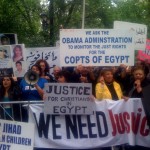
This gallery contains 4 photos.
Egyptian Christians protest near Egypt’s UN embassy on Wednesday May 18
Bahrain Soccer Star, A’ala Hubail, Still in Detention
Since writing this story three weeks ago, military trials have commenced and there are unconfirmed reports that Hubail was sentenced to four years in prison.
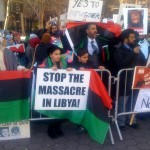
This gallery contains 10 photos.
The Arab Spring at the UN: Protesters have been gathering daily outside the world body’s HQ in NYC in solidarity with demonstrators back home
Asked if clause exempting non-state parties to the ICC meant that it would exclude mercenaries from countries not signed on to Rome Statute, Amb. Gerard Araud said:
“No, that’s, that was for one country, it was absolutely necessary for one country to have that considering its parliamentary constraints, and this country we are in. It was a red line for the United States. It was a deal-breaker, and that’s the reason we accepted this text to have the unanimity of the Council.”
No Overseas Ballot for Irish Abroad
With 1,000 Irish emigrating weekly, next week’s election would be an opportunity to exact electoral revenge on the government – but Irish citizens living abroad do not have the right to vote.
…[T]he founders of the United Nations understood that sovereignty confers responsibility, a responsibility to ensure protection of human beings from want, from war, and from repression.
When that responsibility is not discharged, the international community is morally obliged to consider its duty to act in the service of human protection.
…
The last decade of the twentieth century saw unprecedented progress in international law, humanitarian law and the establishment of international legal institutions. There also was increased acceptance of international norms by Member States, at least in principle.
These steps led to important human protection advances in the Outcome Document of the 2005 World Summit.
The Heads of State and Government embraced a responsibility to protect. You might have heard of “R2P,” the responsibility to protect – protecting populations by preventing genocide, war crimes, crimes against humanity and ethnic cleansing.
The Responsibility to Protect has undergone further doctrinal elaboration and institutional expression over the last five years.
When I was campaigning to become Secretary-General, I pledged that if and when I was elected as Secretary-General, I would do my best to operationalize it. This is what I have been doing for that last four years.
There are some states that are still feeling uncomfortable and who have skepticism of the concept of “R2P,” whether this is going to be used as a tool by the big powers to interfere in their domestic politics.
However, my doctrine envisages that our efforts to prevent these awful crimes rest on three pillars: first, state responsibility, first of all, the State should be responsible second, international responsibility to help states to succeed and third, timely and decisive response should national authorities manifestly fail to protect, including under Chapter VII, if the Security Council deems such steps necessary.
(excerpts from UN Secretary-General Ban Ki-moon’s Cyril Foster Lecture 2011 on “Human Protection and the 21st Century United Nations” delivered at Oxford University on Feb. 2)